
a piano technician’s guide to selecting the right piano
Trying to buy a piano can be overwhelming, especially if you’re not sure what to look for. Between the endless supply of used pianos on marketplace websites, the number of digital pianos on display at music stores, and the vast range of pricing, it can be confusing. You may be wondering, “what kind of piano would be best for me?” or “do I need a real piano, or is a digital one fine?”
I’ll start off by discussing the differences between digital and acoustic pianos, and then we’ll look at the different types of acoustic pianos.
QUICK GUIDE
- Choose a grand piano if you want the best performance and have the space.
- Choose an upright piano if you want a quality acoustic instrument for home use.
- Choose a digital piano if space, volume, or portability are your main concerns.
DIGITAL PIANOS
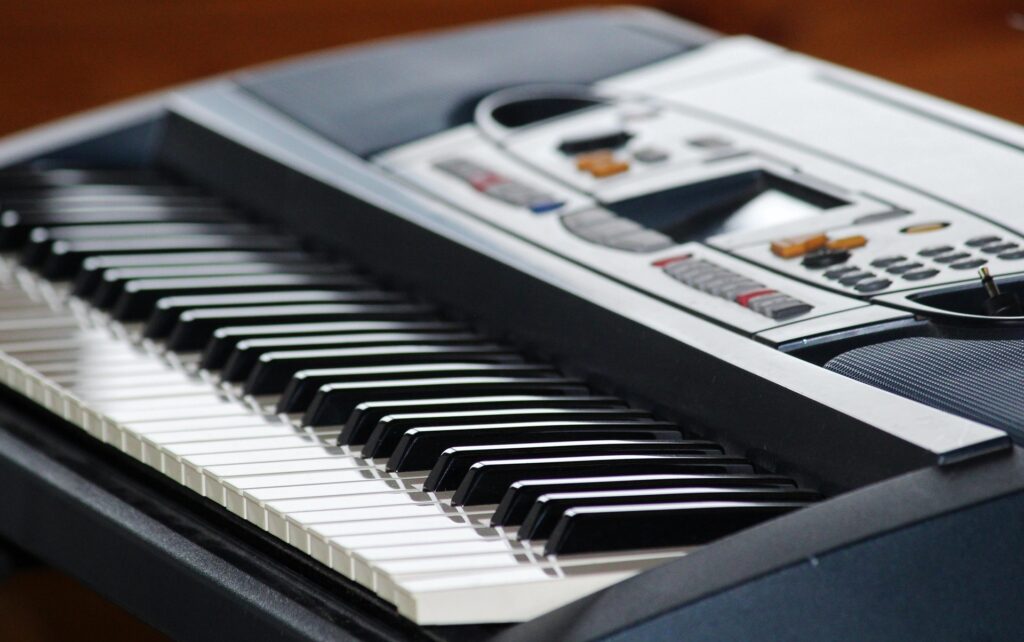
Digital pianos are keyboard instruments that use pre-recorded sounds (called sampling) and/or complex computer programming to emulate the sound of an acoustic piano. They have been around since the ‘80s and have advanced considerably in the time since then in terms of accuracy, quality, and affordability. Modern digital pianos are often lightweight, portable, and available in a wide range of styles and price points.
Digital pianos can be a practical option for those with space limitations, volume concerns, or budget constraints. They require no tuning and offer features like headphone use and additional built-in sounds. However, they cannot fully replicate the touch, tone, and responsiveness of an acoustic piano. For serious players or those seeking a traditional playing experience, an acoustic piano is typically the better long-term choice.
A digital piano may be right for you if:
- You need to take your instrument with you to rehearsals, shows, church, etc.
- You live in an apartment or living space that doesn’t allow acoustic pianos.
- You want to store the instrument out-of-sight when not in use.
- You mostly practice at night and/or need to practice with headphones.
- You move frequently, and don’t want to deal with the expense of having a piano moved.
ACOUSTIC PIANOS
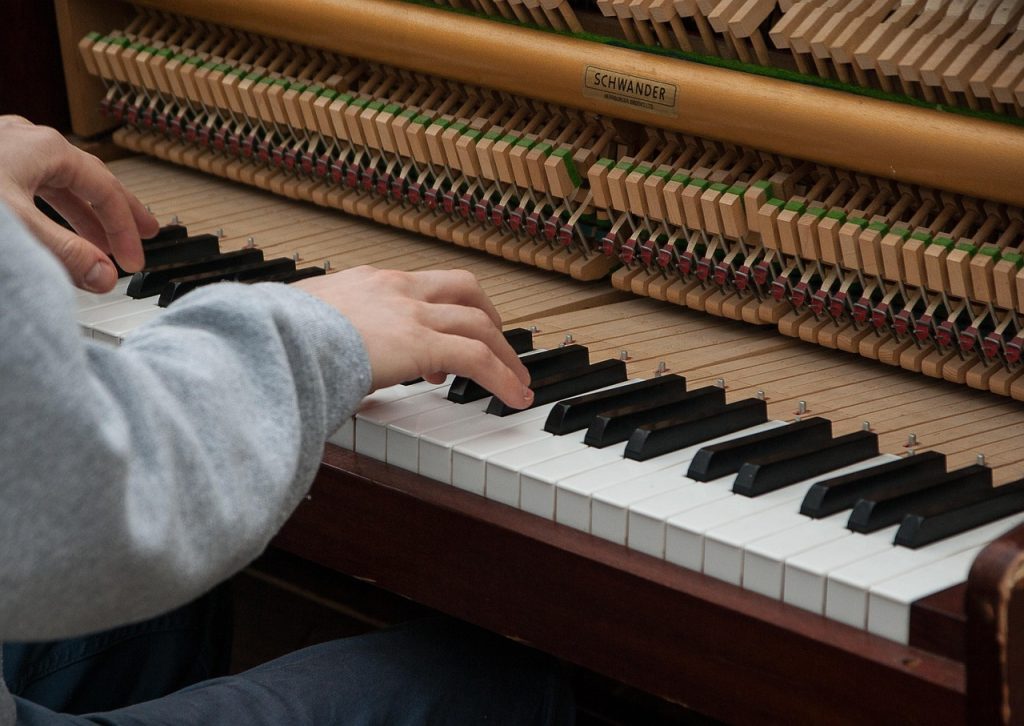
Acoustic, or real, pianos, are keyboard instruments consisting of a (typically wooden) case, a soundboard, (usually) 88 keys, an action (the mechanism allowing the strings to be hit when a key is pressed), over 200 strings, and a cast-iron plate to support the 20+ tons of tension the strings are under. Of course, there are other parts, but those are the main ones. Pianos, as we know them today, first started to take shape in the early 1700s as composers and musicians demanded a keyboard instrument to replace the harpsichord, which lacked the tone, volume, and expressive control they desired. The instrument would continue to evolve through the early 20th century. The basic functional design of pianos has remained relatively unchanged for the past 100-or-so years.
Today, acoustic pianos are favored by serious pianists for their superior touch-response, fuller and richer sound, and authentic playing experience compared to digital pianos. A piano that is of good quality and well-kept can last a lifetime and be passed down for generations. Most pianos will need significant work every 50-100 years, such as restringing, and possible rebuilding of the action.
The cost to maintain an acoustic piano typically includes regular tuning and occasional repairs as needed. A well-maintained piano won’t require major work often, but it’s important to plan for periodic service over time.
An acoustic piano may be right for you if:
- You prioritize quality and authenticity over portability.
- You want something that can last a lifetime.
- You can afford to have it properly maintained.
TYPES OF ACOUSTIC PIANOS
For the sake of brevity, I am going to simplify the categories of acoustic pianos a bit here. The main categories are grand pianos, upright pianos, and spinets. The first two types can be broken down further, and there are also other types, but we are going to focus on the most common pianos.
GRAND PIANOS
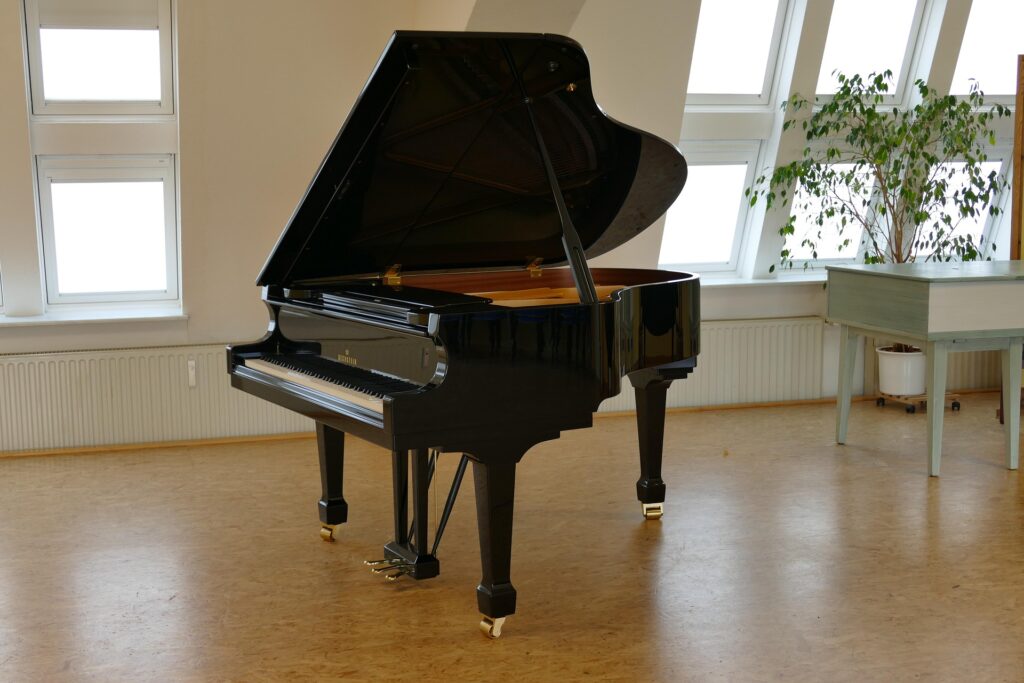
These pianos are characterized by strings that lay horizontally in a (roughly) L-shaped frame sitting on three legs. Grand pianos can be anywhere from under 5’ long to over 8’ long. The longer the piano is, the louder it will be. For this reason, most people go with a 5-6’ grand piano for home use, depending on room size.
The invention of the grand piano is credited to Bartolomeo Cristofori in the early 1700s. The piano would continue to evolve throughout the next two centuries, and the basic design has remained relatively unchanged over the past 100 years.
These are generally considered the best pianos for a few reasons:
- Longer bass strings than other piano types, leading to a better and more balanced sound across the piano’s range.
- The keys themselves are longer (the part of the keys inside the piano, not the white and black parts you see), which gives the pianist more expressive control over the instrument.
- The mechanism inside has a special part unique to grand pianos called the repetition lever, which allows the pianist to play a note again before the key has fully returned to its starting position. This means an individual note can be repeated faster than on other pianos.
TYPES OF GRAND PIANOS
- Baby Grands: 5’8” or shorter
- Parlor Grands: Between 5’9” and 6’ long
- Grands: Between 6’ and 7’ long
- Semi-Concert Grands: Between 7’ and 8’9” long
- Concert Grands: 8’10” or longer
UPRIGHT PIANOS
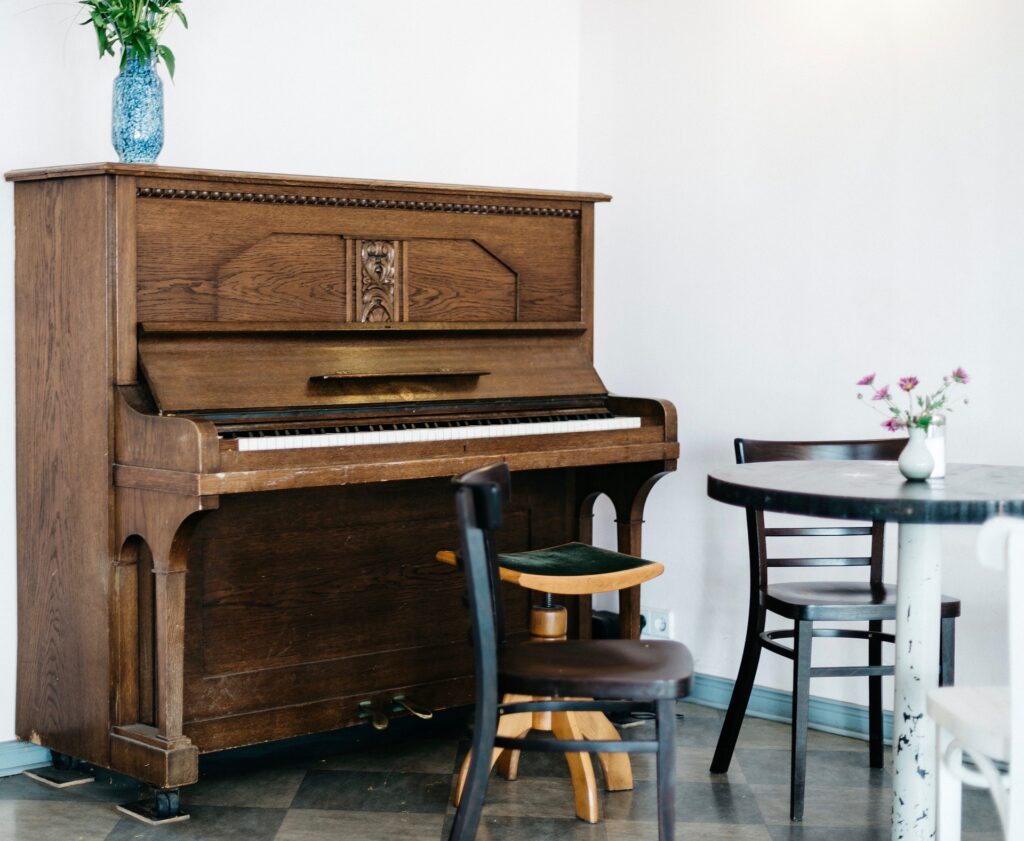
Also called “vertical pianos”, these instruments are characterized by strings that lay vertically in a box -or-cabinet shaped frame, usually around 36-48” tall. These pianos first came about to make the piano more affordable, with early models reportedly being quite awful to play. They existed, at least as prototypes, as early as the mid-1700s. It wasn’t until 1826, when London-based piano maker Robert Wornum patented his take on the upright action, that upright pianos became a viable option for real-world use.
Today, upright pianos are the most popular type of acoustic piano for home-use due to their balance between a compact size and quality of touch and tone. While uprights don’t offer quite the same responsiveness as grand pianos, they provide excellent performance for most home and studio use.
TYPES OF UPRIGHT PIANOS
- Console Upright: 40-43” tall
- Studio Upright: 44-48” tall
- Full-Sized Upright: 49” or taller
SPINETS
A sub-category of vertical pianos, spinets, became popular during the Great Depression when people couldn’t afford food, much less a full-sized upright or grand piano. These pianos were characterized by their smaller size (usually about 36-40” tall) and affordability compared to other piano types. Spinets haven’t been produced (at least in serious numbers) since the advent of the digital piano in the ‘80s.
These are generally considered the least desirable type of acoustic pianos for a few reasons:
- Due to their short stature, these pianos often have poorer tone than other acoustic pianos (all other factors being equal, longer bass strings = better tone).
- The keys on spinets are shorter than on other pianos to accommodate the action (mechanism) sitting underneath and behind the keys, meaning the pianist has less expressive control over dynamics.
- Because these were designed to be budget pianos, shortcuts were often taken in their production, such as using lower quality materials, less attention to detail, etc.
- Most, if not all, spinets are at an age where they need serious repair work; the cost of which would dwarf the value of the piano.
These pianos are still loved by some – especially those who grew up playing on spinets, or who inherited their piano. Some spinets, such as the Baldwin Acrosonic, have even developed a cult-like following and continue to retain some value.
CONCLUSION
My recommendation for most pianists would be to get the best quality (and condition, if buying used) acoustic piano they can afford, and the type (upright vs. grand) that best fits their available space and aligns with their musical needs. If you’re considering buying a piano and aren’t sure what to look for, especially when buying used, I’m always happy to offer guidance.

Tanner Honig is a Certified Piano Technician and owner of Commonwealth Piano Services, based in Stafford, Virginia. With a background in both piano technology and music, his work is guided by the belief that a piano should be more than something that simply functions; it should be inspiring to play. Through skilled service, practical education, and honest guidance, he helps piano owners better understand and care for their instruments so they can focus on what matters most: making music.