
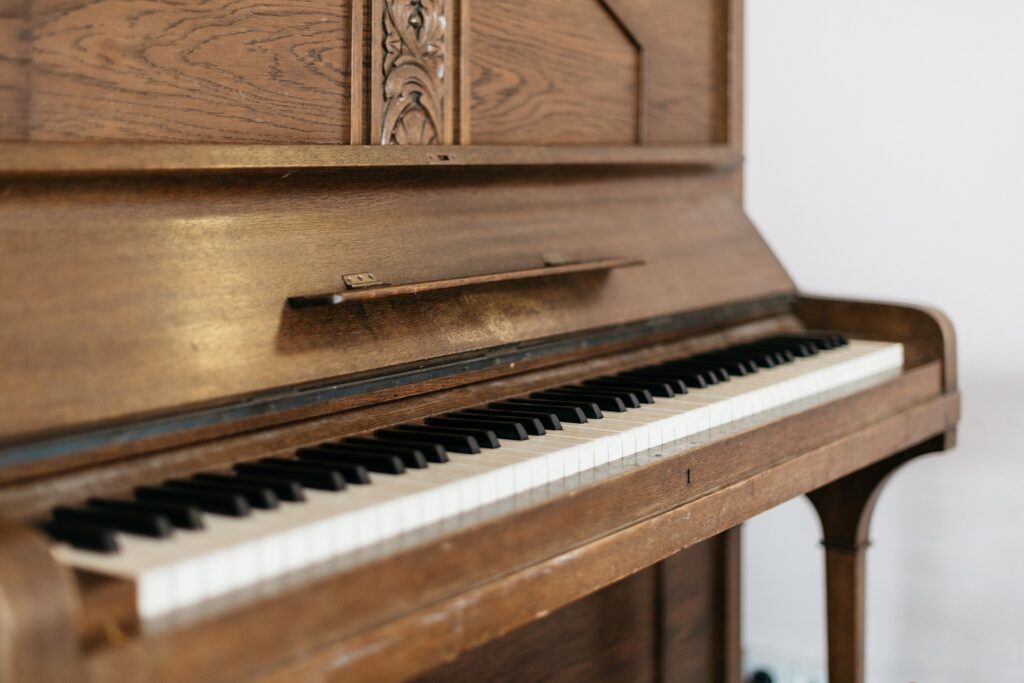
Buying a used piano can be a great way to save money, but it’s not always as straightforward as it seems. Perhaps you’ve seen the nearly endless supply of free or dirt-cheap pianos on Facebook or Craigslist. While it may seem like a great deal at first glance, there are some factors that should be considered beyond the cosmetic condition of the piano’s exterior. Common issues I see as a technician on used pianos include worn-out hammers, rusty strings that are years past due for replacement, issues with the internal mechanism (the action) such as poor regulation or broken parts, and uneven keys. While these issues can often be addressed, many of the free or unbelievably cheap pianos I see would need hundreds (or sometimes thousands) of dollars of work just to be playable, dwarfing the piano’s near-zero value.
BEFORE YOU START SHOPPING
Before you start shopping, consider the following:
- What kind of piano am I looking for? There are three main types: spinets, uprights, and grand pianos. Each has their own benefits and drawbacks. See my post on the different types of pianos to learn more.
- What is my budget? Keep in mind that the piano will need to be moved, and may need work beyond tuning, which should be included in this budget. Having a technician inspect the piano can get you an estimate of how much work the instrument needs, and what it should cost.
- Are you planning to buy from a private seller, or a piano dealer/retailer? Dealers often have benefits such as free delivery, limited warranties, trade-in offers for your old piano, and/or a free tuning included – these will come at a higher cost than private sellers, and dealers will usually be focused on selling more expensive pianos. Private sellers will often have better prices and may be more willing to accept an offer if they need to sell the piano by a specific date (before they move, etc.).
- How will I move it? Is the seller paying to move it? Expect to pay around $500 to have an upright piano moved locally, or more than that to have a grand piano moved. Local moving companies may or may not be experienced with moving pianos, so it’s important to make sure they are experienced professional piano movers. While some may attempt to move upright pianos themselves, improper handling can cause damage or injury. I strongly recommend hiring professional piano movers.
QUICK DEAL-BREAKERS
I would recommend walking away if you notice any of these:
- Severe rust or water damage
- Multiple broken strings
- Strong musty smell (possible humidity damage)
- Smoky smell (only if this bothers you)
SIGNS A PIANO IS WORTH CONSIDERING
- Even key height and consistent feel from note to note
- Minimal rust on strings (some rust is common on older pianos)
- Clean interior (not dusty, moldy, or corroded)
- Known brand with solid reputation
- Has been tuned within the past 12 months
WHAT YOU CAN CHECK YOURSELf
Once you’ve found a piano you’re interested in, here are some things that you can evaluate on your own to weed out the most obvious issues – these can usually be evaluated based on photos of the instrument:
- Does the exterior appear to be in good condition?
- The reputation of the manufacturer – particularly the reputation at the time the piano was produced (i.e. “were Baldwins good in the ‘60s?”). There are great examples of pianos from brands of all qualities and price points, but it’s still worth asking “was this a quality instrument when it was new?”
- Do there appear to be missing or broken strings? This is a good indicator that the piano hasn’t been properly maintained.
- Are the strings rusty? This is a good indicator that the piano is either 50+ years old or has been subject to excessive humidity (possible water damage). It also means that the piano won’t sound nearly as good as it did when it was new.
- Are the keys uneven? (lay a straight-edge across the keyboard to check this) If there are significant differences in the height of the individual keys, the piano will likely need to be regulated – a series of adjustments made to the piano’s action to make it play as it should.
WHAT A TECHNICIAN SHOULD CHECK
These will need to be evaluated in-person by a technician:
- How far out-of-tune is the piano, and will there be a problem getting it up to pitch? The main things the technician would look for here are overly loose or tight tuning pins, or issues with the pin block.
- Inspecting the plate and soundboard. Some issues could include cracks (a crack in the plate means the piano is probably beyond saving), a lack of crown in the soundboard, bridges or ribs separating from the soundboard.
- Examining the action (the internal mechanism), including the hammers, dampers, and pedals.
CONCLUSION
Please note that this is meant to be a helpful resource, not an exhaustive checklist. If you’re unsure about a piano, its best to have a piano technician inspect the piano prior to purchasing so you’re not caught by surprise if the piano needs significant work. If you’re seriously considering a piano, having it inspected before purchase can save you from costly surprises. I provide pre-purchase inspections and can give you a clear picture of what the piano needs and whether it’s worth pursuing.
CONTACT ME TO SCHEDULE AN INSPECTION:

Tanner Honig is a Certified Piano Technician and owner of Commonwealth Piano Services, based in Stafford, Virginia. With a background in both piano technology and music, his work is guided by the belief that a piano should be more than something that simply functions; it should be inspiring to play. Through skilled service, practical education, and honest guidance, he helps piano owners better understand and care for their instruments so they can focus on what matters most: making music.