
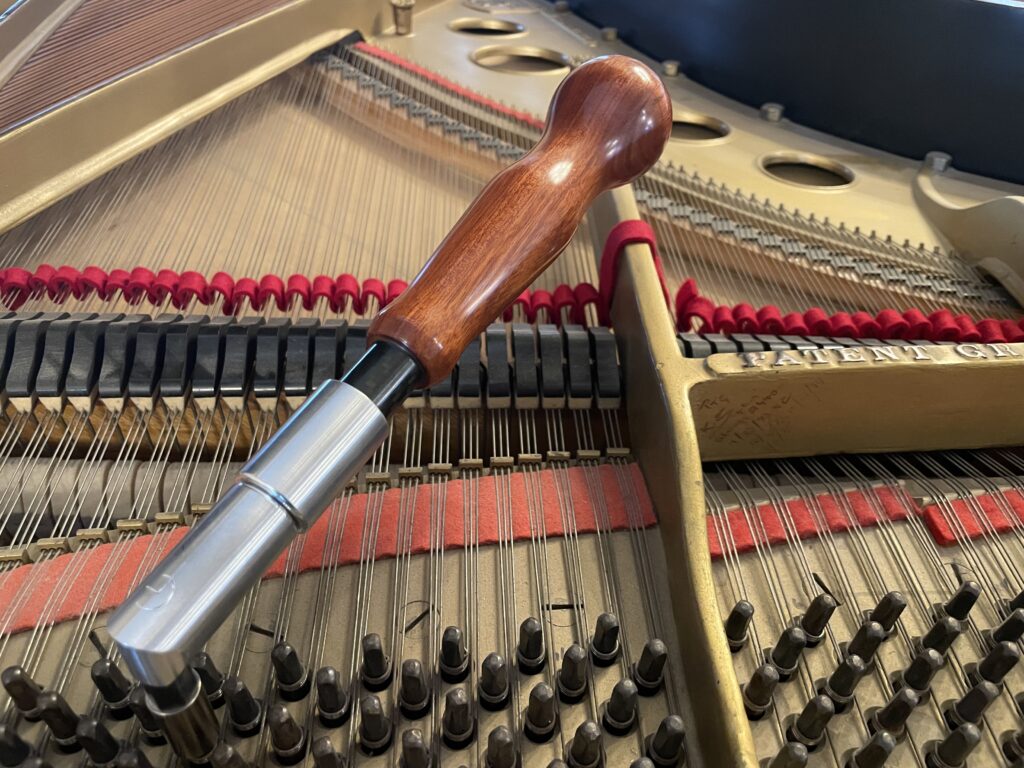
If you’ve ever wondered why your piano doesn’t stay in tune, you’re not alone. Humidity and temperature, age and condition, and regular use can all affect how well a piano holds its pitch.
THE SHORT ANSWER
There are many causes of tuning instability, so the best thing you can do to keep your piano performing at its best is to keep the piano’s environment at a consistent temperature and humidity, and have it serviced regularly. For some pianos, installing a Piano Life Saver can also help to protect your instrument and provide more consistent performance.
WHAT DOES AN OUT-OF-TUNE PIANO SOUND LIKE?
Since pianos drift out of tune gradually, it can be hard to tell when they start to go out of tune. Oftentimes, it isn’t until after the piano has been tuned that people realize how far out of tune their piano had been.
Some signs your piano isn’t in tune anymore include:
- Single notes begin to sound “wavy” or like they’re vibrating
- Octaves stop sounding clean together
- Your favorite piece to play starts to sound different or “off”, even though your technique hasn’t changed
CAUSES OF TUNING INSTABILITY
As mentioned above, there are a lot of reasons why a piano may not stay in tune well or lose its ability to do so over time. I like to think of the causes in two categories: external factors, and internal factors.
External factors are things that impact the piano’s performance but aren’t part of the piano. They are usually things that either the pianist has control over or cannot be controlled. These would include things like changes in humidity and temperature, what kind of environment the piano lives in, and whether it sees occasional use or daily, intensive practice. A piano in an excessively humid environment will likely develop rust and deteriorate far quicker than one in a moderate environment. Likewise, a piano in an excessively dry climate may be at greater risk of a cracked soundboard.
Internal factors are directly related to the health of the piano. They’re typically things that either a piano technician can help with, or things that are beyond fixing. These would include how well the piano has been maintained, the age of the piano, and the overall health of the instrument. Even a new, quality, well-maintained piano needs to be tuned every 6-12 months to maintain proper tuning – assuming that the external factors are ideal for the instrument. As pianos age, they can lose their ability to hold a stable tuning, especially if they’ve gone decades without proper care. As the strings age, they become more prone to breaking and may not hold their tuning as well as they once did. It’s just not realistic to expect the same level of performance from a piano that’s 40+ years old that you can expect from a new instrument. This means that more frequent servicing may become necessary as the piano ages. While some pianos can be rebuilt, the cost often far exceeds the piano’s resale value, making replacement or regular maintenance the more practical options.
HOW TO PROTECT MY PIANO AND KEEP IT IN TUNE
I would say there are three main things that you can do to keep your piano performing at its best: keeping the piano in a favorable environment, regular servicing, and installing a Piano Life Saver.
THE IDEAL ENVIRONMENT
Pianos are sensitive, and even small changes in humidity or temperature can impact the tuning. When a piano is moved, whether to another room or another building, it will need to be tuned after acclimating. When possible, it’s best to avoid placing a piano next to vents, windows, or on exterior walls as these are all places subject to more frequent (and more extreme) changes in temperature and humidity. Additionally, keeping the room the piano is in at a consistent temperature, as much as is reasonably possible, between tunings is ideal. Most manufacturers recommend a humidity level of around 40-50%, but it’s always a good idea to check with the manufacturer of your piano when possible as the exact number varies by manufacturer. Keeping a somewhat consistent environment is more important than focusing on a specific number, so don’t get too hung up on the exact temperature or humidity level.
The transitions between the hot, humid summers and the dry, cold winters we experience in Virginia can cause significant wear and stress on pianos if proper care is not taken. These seasonal weather changes are one of the primary reasons that pianos in the Stafford/Fredericksburg area benefit from regular tuning and humidity management.
WHAT DOES REGULAR SERVICING LOOK LIKE?
Most pianos should be serviced every 6-12 months. Pianos that are brand new, have been recently moved, or see heavy use may require more frequent tuning. In a perfect world, the best time to have your piano tuned is 2-4 weeks after you switch from heat to A/C (and vice versa) with the seasonal changes. If the piano is being used in a professional setting (church, performances, music schools, studio, etc.), more frequent tuning may be necessary due to the greater than average usage putting more strain on the strings and action, and the professionals’ constant need for top performance from their piano.
It’s also important to take care of other repair needs the piano may have as they arise, rather than putting off small problems until they become serious issues. In some cases, an older piano may reach a point where replacement becomes more practical than continued repairs. A technician can help determine which option makes the most sense.
WHAT IS A PIANO LIFE SAVER? AND DO I NEED ONE?
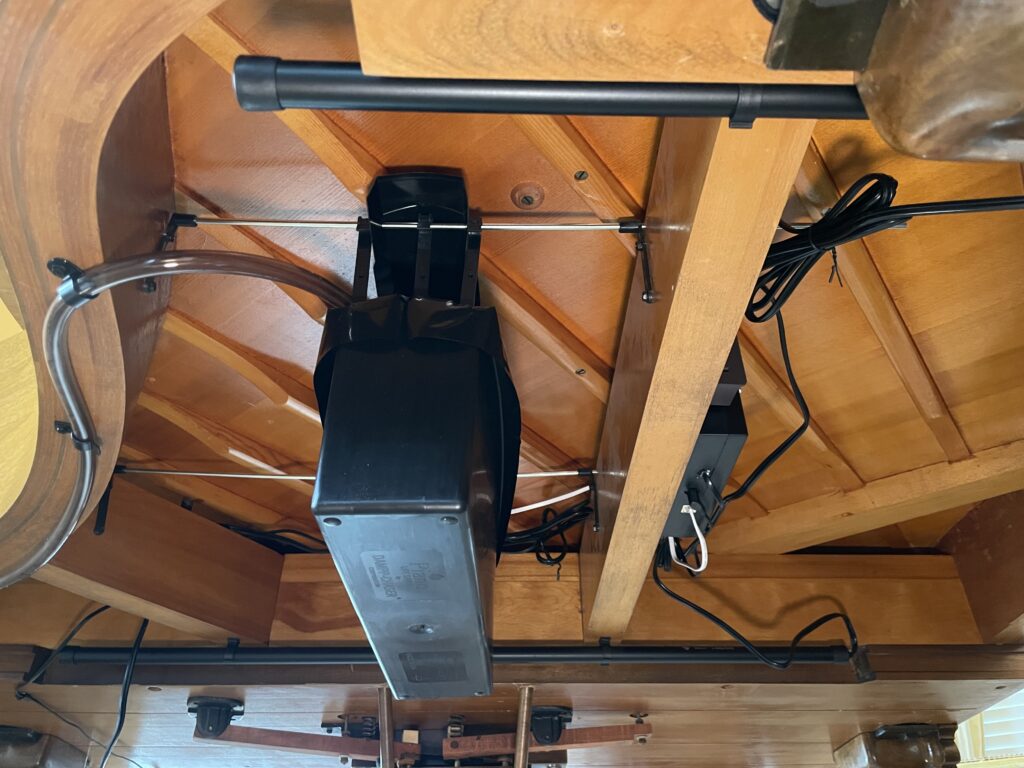
The Piano Life Saver, produced by the Dampp-Chaser Corporation, is a humidifier/dehumidifier system designed specifically for pianos. It is installed inside or under the piano and has a smart sensor that knows when to switch between humidifying and dehumidifying to keep the piano at an ideal humidity level. It is also designed to protect the piano from moisture damage while doing so.
The most noticeable impact of the Piano Life Saver is that it helps with tuning stability. It should be noted that the goal of the system isn’t so the piano can go longer without being serviced; its purpose is to have more consistent performance and tuning between services. In addition to helping with tuning stability, the Piano Life Saver also helps to mitigate some other issues caused by humidity fluctuations, including cracked soundboards, sticking keys, and inconsistent performance of the piano that often comes with seasonal changes.
Installing a Piano Life Saver is an investment in your instrument, so it’s worth considering your long-term plans for the piano before having one installed. For some pianos, particularly old, worn-out ones, you may see much better results putting the money towards a newer piano rather than installing a Piano Life Saver into a piano that has realistically reached its end-of-life.
CONCLUSION
A piano going out of tune is normal and to be expected, but how quickly it happens depends on many factors, including its environment, how often it’s played, and its overall condition. Fortunately, regular service and maintaining a stable environment can go a long way toward keeping a piano performing at its best. Understanding why pianos go out of tune helps pianists make informed decisions and avoid larger problems down the road.
If you’re concerned about how well your piano is holding its tuning, or simply have questions about its condition, a qualified piano technician can help identify the underlying causes and recommend the appropriate course of action.

Tanner Honig is a Certified Piano Technician and owner of Commonwealth Piano Services, based in Stafford, Virginia. With a background in both piano technology and music, his work is guided by the belief that a piano should be more than something that simply functions; it should be inspiring to play. Through skilled service, practical education, and honest guidance, he helps piano owners better understand and care for their instruments so they can focus on what matters most: making music.