
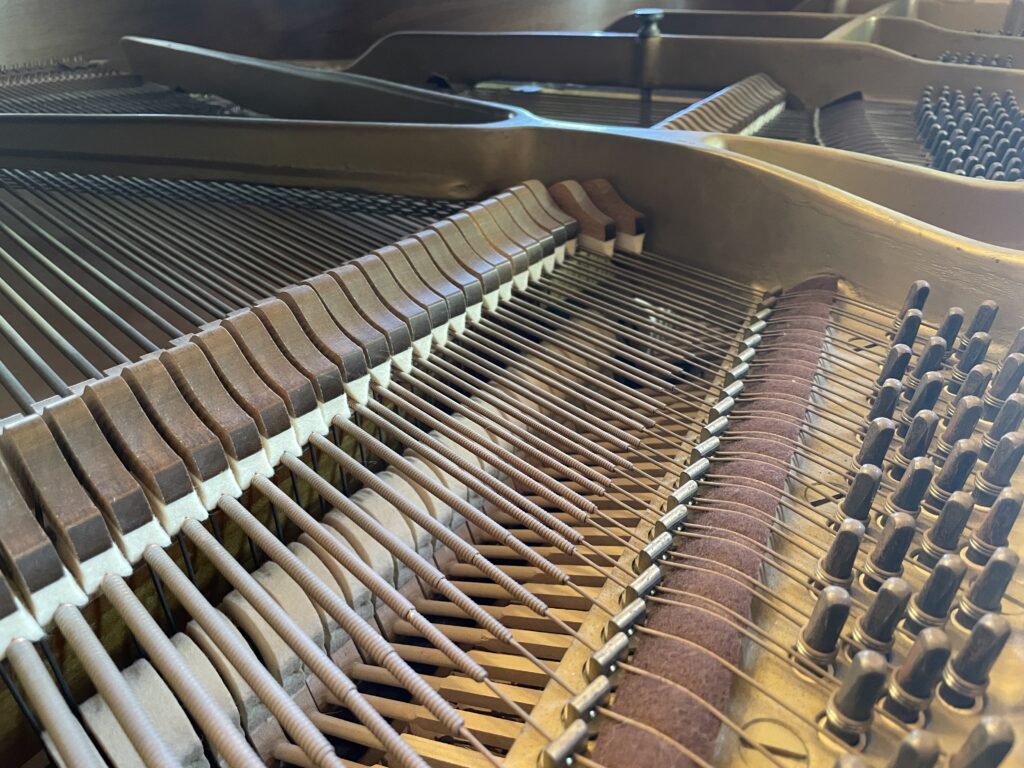
Over time, even a well-maintained piano can lose some of its tonal character. A once warm and clear instrument may gradually become harsh or dull; or individual notes may take on a different tone, standing out from the rest of the piano. The most common issues pianists notice include a loss of definition in the bass or a painfully harsh treble section, although tonal changes can (and often do) occur across the piano’s range.
Fortunately, many tonal problems can be improved significantly without completely rebuilding the piano (a process that can cost tens of thousands of dollars). The right solution depends on the overall condition of the instrument, as well as the pianist’s goals and budget.
It’s worth noting that tonal work has limits, and that tone in general is subjective. The procedures discussed below can have a significant impact on the tone of an older piano, but they’re not going to make a decades-old instrument sound like a brand-new piano. At a certain point, there are physical limitations that can’t be overcome short of rebuilding. The goal of tonal work is to bring the piano closer to its original character as much as realistically possible. We can’t, and shouldn’t, try to make a piano something it isn’t, i.e. trying to make a Yamaha sound like a Steinway, or vice versa. Additionally, the procedures discussed below should only be performed by a professional piano technician.
“The Bass Sounds Muddy or Lacks Clarity”
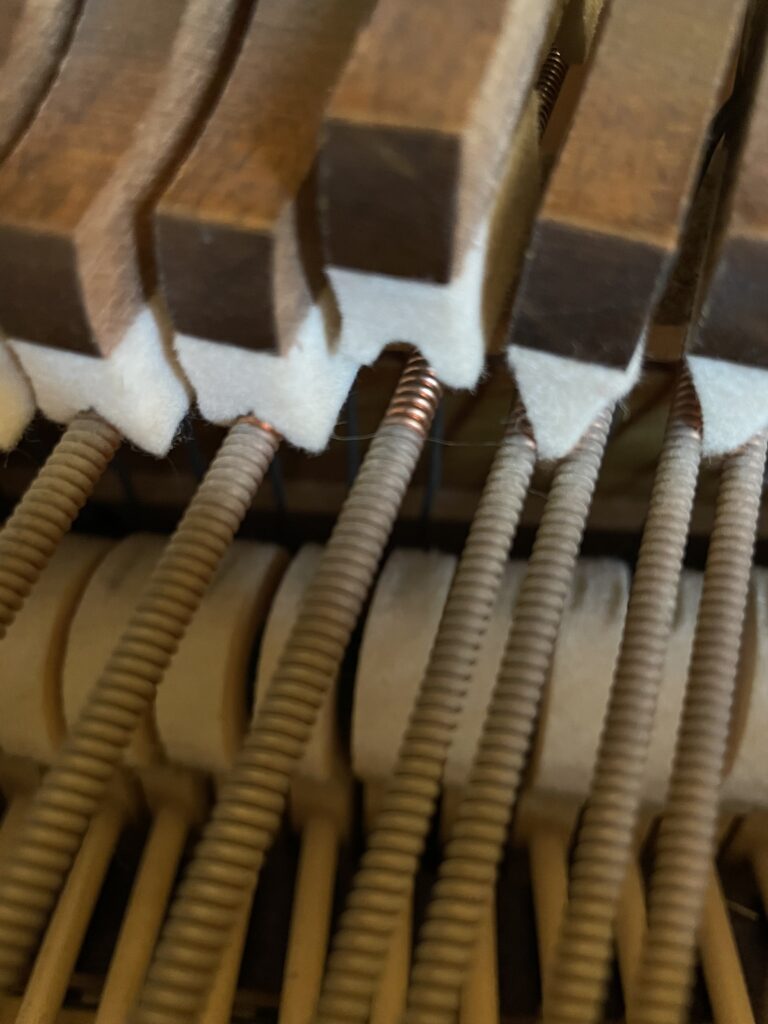
As mentioned above, one of the most common complaints with older pianos is a bass section that sounds dull or indistinct. This is usually caused by aging wound bass strings. Over time, the copper windings collect dust and debris, while oxidation and corrosion gradually reduce clarity and sustain. Smaller pianos, like spinets, also tend to have a naturally muddier bass tone due to their shorter bass strings.
Twisting the Bass Strings
When more expensive options aren’t practical, twisting the bass strings can sometimes provide noticeable improvement at a relatively modest cost. This procedure tightens the winding of the strings and can restore some clarity to the bass section.
Results vary depending on the condition and age of the strings, but many pianos benefit from a bass tone that sounds less muddy afterward. It won’t make old strings sound new, but it can extend the life of the current strings. For strings that are excessively rusty, this procedure may not be an option due to the higher risk of string breakage.
Hammer Voicing and Reshaping
Sometimes the issue isn’t caused by the strings, at least not completely. The condition and shape of the hammers can also affect the bass clarity.
If the hammers are excessively worn or hardened, voicing or reshaping may help to produce a more focused sound. Because tone and touch are closely connected, voicing and reshaping should only be done on a piano that is properly regulated. When hammers are reshaped, additional regulation adjustments will be needed afterward to compensate for the felt removed from the hammers during reshaping.
Restringing the Piano
The only way to truly restore the tone of heavily worn strings is to replace them. A full restringing, usually performed as part of a larger rebuilding project, can dramatically change the sound of a piano.
Restringing is a significant investment, and it’s not the right choice for every piano. For those instruments that don’t have significant sentimental, historical, or financial value, a newer piano often provides better long-term value and playability. One should also consider that a rebuilt piano may not sound or feel exactly like it did when it left the factory, and that you will essentially be paying for a piano that you’ve never played.
“My Piano Sounds too Bright or Harsh”
An overly bright or piercing tone is often caused by hammer felt becoming compressed and hardened where it repeatedly strikes the strings. Grooves develop over years of playing, and the piano loses some of its warmth as a result.
Voicing the Hammers
Voicing can produce a dramatic improvement in tone without replacing major parts. A technician may soften or reshape portions of the hammer felt to reduce harshness and create a more pleasant sound. The degree of improvement depends on the condition of the hammers and the piano’s overall condition and quality.
Again, voicing work is most successful when the piano’s action is reasonably well-regulated. Many tonal complaints are the result of a combination of tonal and mechanical issues, which is why regulation and voicing are often performed together.
Replacing Hammers
If the hammers are heavily worn or have already been reshaped multiple times over the years, replacement may eventually become necessary. This is a significant job that requires careful fitting, shaping, regulation, and voicing. While the results can be excellent on the right instrument, it’s a good idea to consider your long-term plans for the instrument before making this investment.
“The Entire Piano Sounds Dull”
Sometimes the issue is not limited to one section of the piano. Older instruments may lose clarity and responsiveness across the entire keyboard. This can happen for several reasons. Aging strings lose brilliance over time, hammers may become overly soft or worn, and an improperly regulated action can limit the tonal power and control.
Regulating the Action
A poorly regulated action can make even the best pianos feel weak or unresponsive, not only causing the pianist unnecessary fatigue, but also impacting the instrument’s tone. If the hammers are not moving properly or striking the strings with the correct speed and distance, the piano may struggle to produce a clear and powerful tone.
Regulation involves adjusting the mechanical relationships within the action so the piano responds consistently and efficiently. Depending on the condition of the piano, and the pianist’s goals, this can range from addressing the most noticeable problems to performing a full regulation.
In many cases, improving the tone of an older piano involves addressing several smaller issues rather than relying on one major repair. Regulation, hammer work, and string servicing often work together to produce the best overall result.
When is Tonal Work Worth It?
Not every older piano is a good candidate for extensive tonal improvement, but many pianos benefit from even minor tonal work, helping you get more life out of your instrument. In some cases, major restoration work may exceed the practical value of the instrument.
As tone is personal and subjective, you will get best results when working with a technician who understands both your musical needs and the piano’s potential.
Conclusion
Even when working within the limitations of an older piano, tonal work can often provide significant improvement, making the piano more enjoyable to play and listen to. The best approach depends on the instrument and the pianist’s goals and budget. Your piano technician can help determine which improvements would be best suited for your piano, and which may not be worth pursuing.

Tanner Honig is a Certified Piano Technician and owner of Commonwealth Piano Services, based in Stafford, Virginia. With a background in both piano technology and music, his work is guided by the belief that a piano should be more than something that simply functions; it should be inspiring to play. Through skilled service, practical education, and honest guidance, he helps piano owners better understand and care for their instruments so they can focus on what matters most: making music.